
Courtesy Paul Post
By Paul Post
From neighborhood bars and breakfast spots to The Hyde, which ranks among the Northeast’s most prestigious art museums, and Finch Paper – the city’s largest industrial employer – the East End of Glens Falls is an incredibly diverse area with deep-rooted ethnic heritage.
It’s also home to one of the state’s smallest school districts, part of the historic Feeder Canal and unique architectural gems such as the former National Guard armory on Warren Street.
Building on the transformative economic development taking place on South Street, officials are now turning their attention across town to the East End, a roughly four-square-mile area from Ridge Street east to the Queensbury town line, and from Dix Avenue down to the Hudson River.
“It’s not just about coming up with a vision, but actionable projects that receive funding,” said Nora Greenberger, senior planner with LaBella Associates, a Glens Falls engineering and consulting firm. “The goal is to understand what are the restraints and opportunities for redevelopment. How do you incentivize investment in abandoned, vacant sites.”
She is guiding a 16-member Steering Committee seeking East End inclusion in the state’s Brownfield Opportunity Area program, which would open the door to a wide variety of funding and technical assistance if an application, submitted 12-15 months from now, is approved.
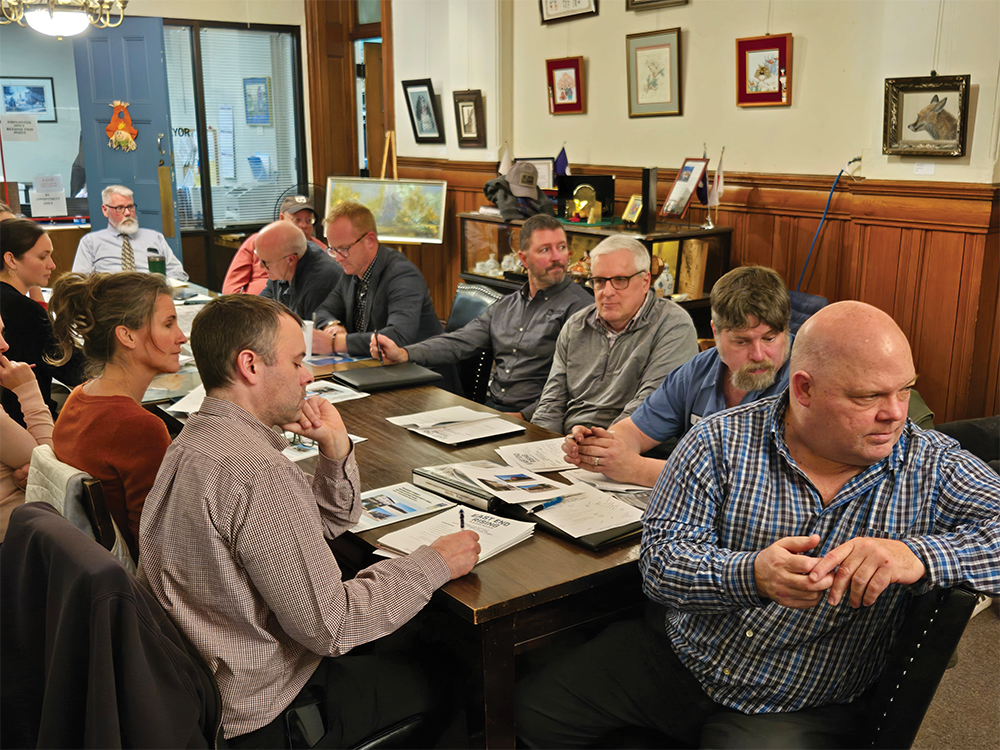
The panel has named its mission “East End Rising” and held its first meeting recently at City Hall. A second meeting is expected in late January at a time, date and place yet to be scheduled.
The group spent most of the first session taking an inventory of existing economic, physical and cultural resources, and vital infrastructure such as the city’s wastewater treatment plant, nearing capacity, that’s crucial future economic development.
There’s also an eclectic mix of single family, multi-family, small retail and old industrial buildings.
“And it’s so walkable, so connected,” said Patrick Dowd, city director of community development. “We don’t want to lose that character as we move forward.”
The group discussed creating a link between The Hyde and the Shirt Factory on Lawrence Street, which attracts huge crowds for fun, food and music on summer Thursday nights, to promote a more arts-based economy. Jim Siplon, Warren County Economic Development Corp. president, said there’s significant potential for home-based arts studios and similar small business.
The goal would be to create an arts overlay district like Beekman Street in Saratoga Springs, which could be encouraged with rezoning to attract new entrepreneurs.
The Town of Queensbury is seeking Brownfield program approval, also, for the South Queensbury area where large, heavy industry was once located on River Street. Greenberger said the East End’s proximity to this area could strengthen the applications of both municipalities.
The shuttered Lehigh Cement Company property is in Queensbury, Glens Falls and directly across the river in Moreau.
Plant Manager David Dreyer said a company-owned bridge crosses the river where, hidden from public view, there’s a large quarry lake on the same level with the river.
Committee Chair Jim Martin, a professional planner, said such assets present virtually unlimited opportunity for recreation-related tourism. The bridge, for example, could link bike paths on both sides of the river.
“The state likes it when municipalities coordinate,” Martin said.
In some places, highly creative uses have been found for large industrial silos such as the cement plant’s. In Quebec city, they’re used as the backdrop for dazzling laser light shows. In Chile, tall concrete silos are now a popular climbing wall destination that garnered international publicity when visited by contestants on the CBS television show, “The Amazing Race.”
One asset panel that members didn’t discuss is East Field, the city-owned ballpark and recreation complex that has a great deal of untapped economic potential. In addition to the Glens Falls Dragons collegiate-level team, many out-of-state youth baseball teams play there and fill local hotel rooms during weekend-long tournaments.
But the city Recreation Commission is currently conducting an in-depth study of the entire East Field property, considering ways to improve and maximize uses of its assets, which include the ballpark, Little League fields, clubhouse, quarry pond and swimming pool. For example, a synthetic turf field surface at the ballpark would extend the outdoor playing season considerably, and allow for many more activities to be held.
Jeff Flagg, city director of economic development, said the East End has numerous old iconic structures such as a former Grist Mill on Maple Street, “all of which are calling for some sort of reuse.”
Glens Falls Common School District (Abe Wing Elementary School) Superintendent Brian George said the East End needs more tax-paying properties to enhance the school’s budget and create more opportunities for students. The East End already has about $30 million in tax-exempt property.
“We want families moving in,” George said.
But this means providing enough affordable housing, while at the same time promoting micro-and home-based business. “It’s a delicate balance,” Flagg said.
“They’re not at odds with each other,” Siplon said. “A residential property can also generate jobs.”
Committee members closed the meeting by seeking feedback from residents. Most comments centered on the need for greater pedestrian safety because of speeding traffic in places such as Maple, Prospect and McDonald streets.
Bethanie Lawrence, World Awareness Children’s Museum executive director, said, “walkability is increasingly important and parking is a huge issue.” Groups of children sometimes walk from the museum several blocks down Warren Street to The Hyde.
Eighty-six sites across New York state have already obtained Brownfield Opportunity Area designation leading to significant redevelopment. In Oswego, a previously abandoned commercial area has been revitalized with a mixed-use, affordable housing project.
In Broome County, an abandoned Endicott-Johnson factory was converted to a residential complex.
The steering committee is expected to meet every two to three months from now until its application for Brownfield program status is submitted.
“This is an incredibly interesting part of the city,” Martin said. “There’s a lot of diversity, a lot of opportunity.”
More information may be found with an online search: Glens Falls East End Rising.