
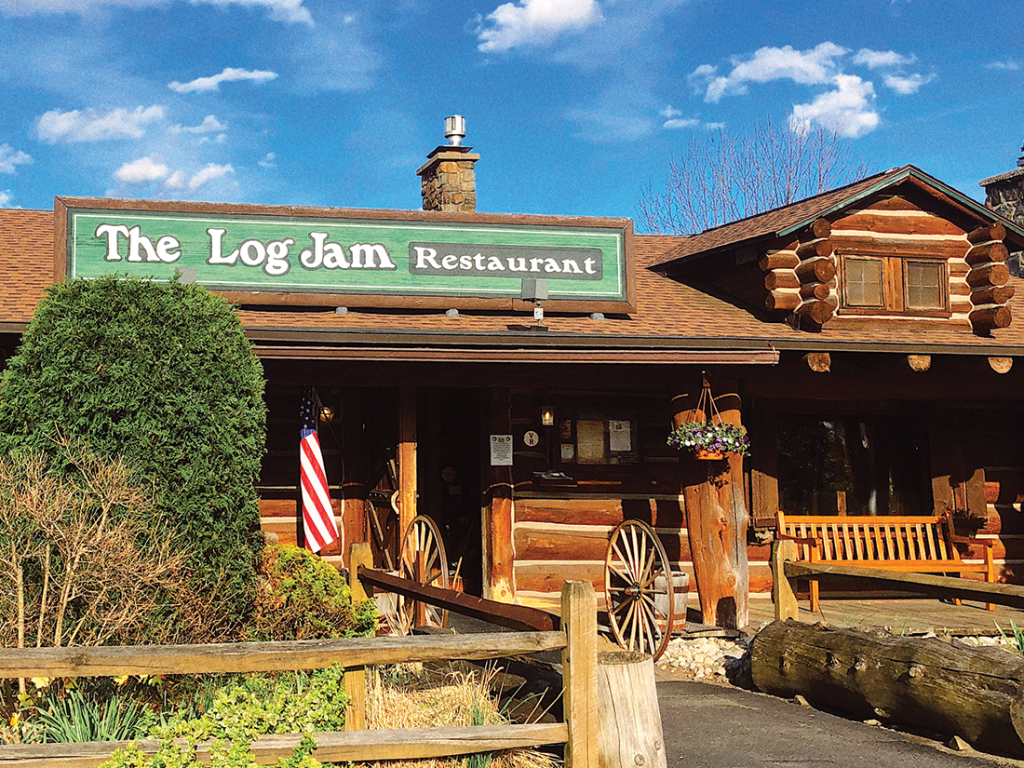
Courtesy Log Jam
By Staff Writer
For 50 years, consistent management and operations have made The Log Jam Restaurant a landmark destination restaurant and steady economic contributor in one of New York’s most seasonal tourism markets.
“My biggest thing is consistency,” said Tony Grecco, who has spent nearly four decades with the business and more than 30 years in a management role. “I want people to know when they come, what they’re going to get, and it’s going to be the same every time.”
That consistency has translated into scale. The restaurant seats approximately 250 guests and, during peak August demand, turns tables three times per night while averaging about 600 dinners. Lunch service adds another 300 to 400 customers daily, bringing total volume to between 800 and 1,000 patrons on a typical summer day.
The menu remains rooted in steakhouse tradition, with custom-cut steaks prepared in-house alongside seafood and fish offerings. That consistent approach to quality, combined with the restaurant’s signature salad bar, has helped define its identity for generations of customers.
In a tourism-driven market like Lake George, where seasonal fluctuations can challenge staffing, pricing and operations, that level of sustained volume carries broader economic implications.
The Log Jam supports a workforce of roughly 100 to 130 employees during peak periods, with a core group of about 50 to 60 returning year after year. Many have been with the restaurant for 15, 20 or even 25 years, including kitchen staff, dishwashers and front-of-house employees. The business has also maintained a 401(k) retirement plan with employer matching for more than 30 years, along with health and other benefits, helping reinforce its ability to retain employees in a high-turnover industry.
“We have employees who have been here 15, 20, 25 years — not just servers and bartenders, but cooks and dishwashers,” Grecco said. “It’s really building a team. The people are what make it.”
That long-term workforce stability provides continuity in a sector often defined by turnover, while also supporting local employment across a mix of full-time, part-time and seasonal roles. In many cases, those roles span generations, with family members working at the restaurant over time.
“I have whole families that have worked here,” Grecco said. “We have generational employees and generational customers.”
The restaurant’s customer base reflects its position within the region’s tourism economy. In addition to local patrons, it draws visitors tied to summer travel, the Saratoga racing season and the nearby outlet shopping corridor, which expanded the area’s visitor mix over time.
Grecco credits much of the operation’s longevity to a management philosophy centered on consistency, respect and internal development.
“I can teach people the job,” he said. “I can’t teach people to respect each other and be friendly. That’s what you have to find.”
All of the restaurant’s managers began in entry-level roles and advanced over time, reinforcing operational knowledge and maintaining a consistent approach to service.
“It doesn’t happen overnight,” Grecco said. “It’s a building process of finding the right people and creating that culture.”
A defining feature of that experience is the restaurant’s salad bar, which includes roughly 40 items prepared largely in-house. While many restaurants have eliminated similar offerings, the Log Jam has maintained and refined its approach over decades.
“That salad bar is one of the main reasons people come here,” Grecco said. “You can’t really get that anywhere.”
The kitchen has also benefited from long-term leadership. Chef Rod Russo, who has been with the Log Jam for more than 30 years, has helped maintain consistency in food preparation and quality while mentoring the next generation of kitchen leadership.
The COVID-19 pandemic tested the business’s ability to adapt quickly. The statewide shutdown in March 2020 came just before St. Patrick’s Day and ahead of the Easter holiday, leaving the restaurant with significant inventory already in-house.
“We had all this food, and we had to do something,” Grecco said.
The operation pivoted to takeout service almost immediately, launching a new system the next day despite having little prior experience with off-premise dining. What began as a way to utilize existing inventory evolved into a substantial short-term revenue stream, including hundreds of takeout meals for major holidays such as Easter and Mother’s Day.
The experience also led to lasting operational changes, including expanded service hours and continuous kitchen operations throughout the day.
While the business has adapted to changing consumer habits, including lighter menu options and modified service models, Grecco said the core approach remains unchanged.
“You’ve got to keep up with the times,” he said. “But you also have to stay true to what you are.”
That balance between adaptation and consistency has helped sustain the restaurant’s role within the local economy, supporting suppliers, attracting repeat visitors and contributing to the broader hospitality ecosystem.
At its core, Grecco said, the formula is built on people.
“It’s the culture, the camaraderie — that’s why we’re successful,” he said. “You can’t build this overnight. It takes years.”
Reporting includes information provided by the Log Jam and interview responses from Tony Grecco.