
Courtesy SRYMCA
By Carol Ann Conover
When a parent in Warren, Washington or Saratoga counties goes looking for infant care today, the search often ends before it begins. The wait list at the Saratoga Regional YMCA’s Malta Early Learning Center stretches two years. In some cases, families are signing up before they even try to conceive.
That reality is not an anomaly. It is the baseline. Between 2019 and 2022, the number of regulated childcare facilities in Warren County fell 40 percent, from 50 to 30, according to a 2023 needs assessment by the Southern Adirondack Child Care Network. Washington County lost 37 percent of its facilities over the same period. Across New York state, 60 percent of census tracts qualified as childcare deserts in 2023, a designation meaning at least three children under age five exist for every available slot, according to a February 2025 report from the Office of the State Comptroller. Rural upstate communities, the report found, are the most negatively affected.
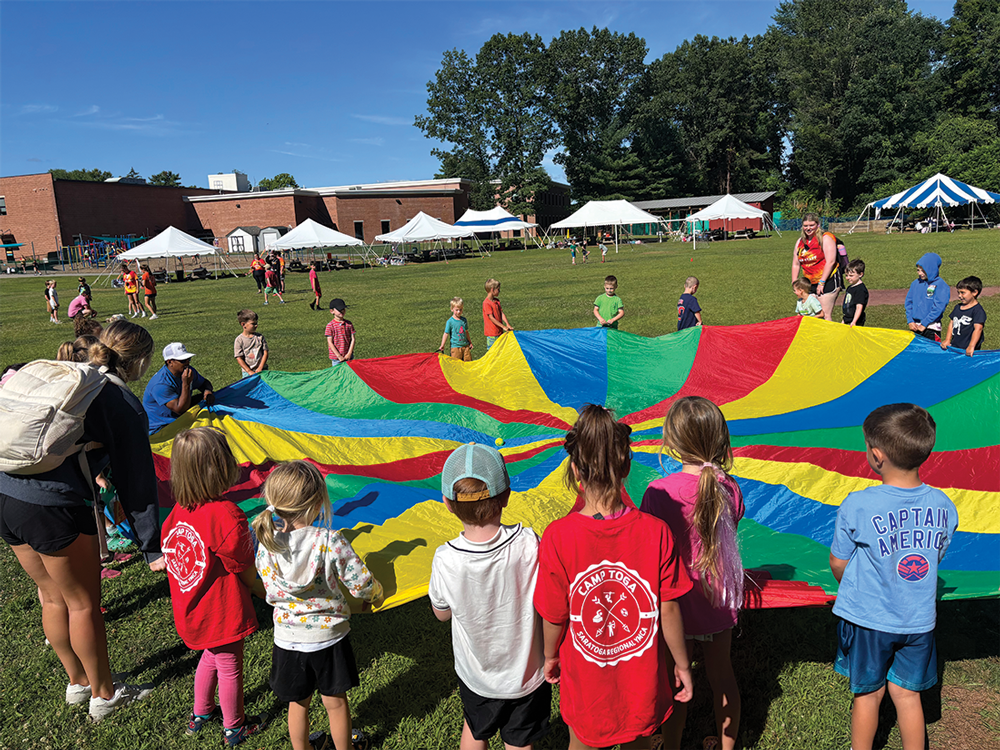
Into that void, the Saratoga Regional YMCA operates a layered system of childcare programming across its six branches. The association expanded its footprint on Jan. 1, 2025, when the Family YMCA of the Glens Falls Area officially merged to become its sixth branch, deepening the organization’s reach across Warren County. The programming spans a licensed full-day daycare center at its Malta Early Learning Center serving approximately 100 children from infancy through kindergarten, a half-day preschool program at its Saratoga Springs branch serving 45 children ages 2 through 4, Universal Pre-Kindergarten classrooms operated in partnership with the Saratoga Springs and Schuylerville school districts serving roughly 72 children, and a school-age before-and-after-care program operating at 15 locations across seven school districts throughout the three-county region, including Glens Falls, Queensbury, Ballston Spa, and Saratoga Springs.
“We believe that every child deserves great care and learning opportunities and no family should be held back by financial constraints,” said Rebeccah Potavin, the YMCA’s associate vice president of child care. “So we do offer financial assistance for all of our programming that we offer as well, regardless of income. So even people who think that they don’t qualify for something, we run them through our system and a lot of times we have generous donors who really want to make sure that you know, income is not a barrier to great programming.”
That financial assistance infrastructure is central to what the Saratoga Regional YMCA’s CEO, Allison D’Antonio, describes as the organization’s defining purpose. The YMCA also accepts DSS subsidies under New York’s Child Care Assistance Program, which serves families of four earning up to approximately $108,000 annually — a threshold that makes it relevant well into the middle-income range but one that not all area providers choose to navigate.
“We accept DSS, which not all providers do,” D’Antonio said. “There’s an administrative function to it that smaller providers don’t have the capacity to work with. So, we did see a large influx in people … unfortunately the state didn’t have enough funding to support all of them. So, we have done our best to accommodate those families through our traditional financial assistance program if they are no longer eligible for DSS funding, but … it’s a terrific program. It allows us as a provider to remain full while providing and making sure that a family can stay in the workforce.”
The state subsidy picture has grown more complicated in recent months. Liza Ochsendorf, director of Warren County Workforce Development, said that childcare consistently ranks among the top three barriers to employment for people coming through regional career centers. She noted that the CCAP subsidy program has been significantly constrained.
“There are families that have had to take their kids out of childcare because their subsidies ended or ran out,” Ochsendorf said. “That was also a barrier to us recruiting and opening more home-based providers.”
Ochsendorf framed the structural problem in terms that go beyond any single funding stream. “There aren’t enough childcare slots, it’s not affordable for families, and the wages of childcare providers are not sustainable,” she said. “So, it doesn’t help to recruit or retain childcare providers with their livable, sustainable wages. So those three issues are constant … the childcare slots, the affordability for families, and then the providers not making a salary that helps us recruit and sustain them.”
New York state data bears that out. The median annual wage for childcare workers statewide was $38,234 in 2023 — more than $20,000 below the median for all New York workers — according to the state comptroller’s report. The state’s average annual childcare cost rose nearly 18 percent from 2018 to 2023, reaching $14,621 per child. A separate analysis by the First Five Years Fund placed New York’s average cost of care at $20,439 per year. The inaccessibility of childcare costs New York an estimated $13.6 billion annually in lost earnings and productivity.
At the Saratoga Regional YMCA, the half-day preschool program runs 9:15 to 11:45 a.m. and costs approximately $13 per hour, with swim instruction and adventure center time included beginning next year. The Malta Early Learning Center runs 7 a.m. to 6 p.m. Monday through Friday year-round and is licensed by the New York State Office of Children and Family Services for up to 96 children. UPK classrooms are fully state-funded and require no tuition or YMCA membership. The before-and-after school BASE program runs at sites spanning Saratoga, Warren, and Washington counties, offering morning care beginning at 7 a.m. and after-school care through 6 p.m.
The workforce dimension of childcare access is no longer a background issue for area employers. D’Antonio said her team is in active conversations with multiple large organizations about employer-supported childcare models. Stewart’s Shops already offers its employees a 50 percent subsidy toward YMCA childcare, a partnership D’Antonio described as a meaningful example of what employer investment can look like.
“Employers are realizing they’re going to have to reserve childcare spots whether they have an employee to fill that spot or not,” D’Antonio said. “It’s more like a healthcare model, right? You’re paying for your employees’ healthcare whether they’re utilizing it or not … in order to recruit and retain staff they need to be in this childcare space.” She noted that healthcare sector employers in particular are taking notice after recognizing that nurses are leaving the field after having children due to a lack of care that accommodates their demanding schedules and longer shifts.
Ochsendorf pointed to a “thirds” model gaining traction in other parts of the country, in which the employer, the state or local government, and the family each pay one-third of childcare costs. She also flagged New York State regulations that currently prohibit most workplaces from housing on-site childcare centers. She called for localized sustainability funds that businesses and individuals could contribute to, helping providers absorb unexpected operational costs that can force closures.
“We’ve got to do something different. We’ve got do something else,” Ochsendorf said. “We can’t just keep throwing money at the problem. We need a system-wide overhaul.”
Back at the Saratoga Regional YMCA, D’Antonio said the organization’s financial assistance program is available to any family, regardless of circumstances, and is not limited to those in persistent financial hardship. “It’s not always just based on someone who might continuously be going through a financial struggle,” she said. “Things happen– someone loses their job, someone’s out of work because of an illness, someone has a tragic life moment and they just can’t keep up. And that’s where we want to step in and support, and that’s what we do.”
Families interested in learning what they qualify for can visit any YMCA branch and ask to be run through the financial assistance program. The Saratoga Springs branch, which houses the association office and the half-day preschool, is located at 290 West Ave. The Malta Early Learning Center, which has openings remaining in its preschool and summer camp programs, can be reached through the Saratoga Regional YMCA’s main line at 518-583-9622. Job openings are posted at srymca.org.