
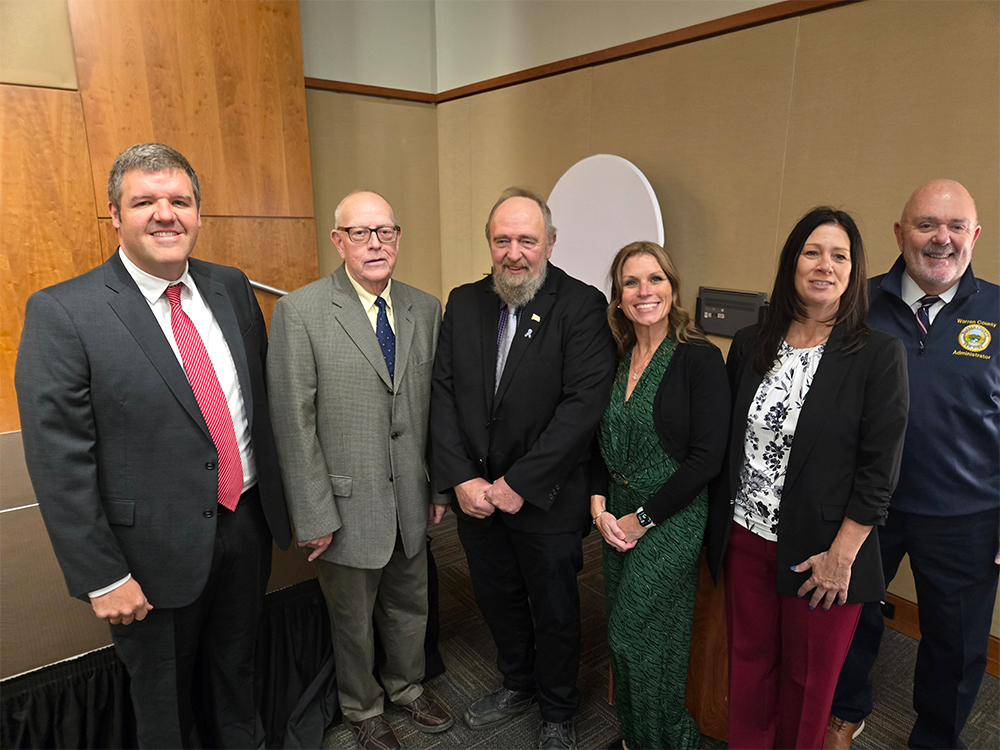
Courtesy Paul Post
By Paul Post
A sales tax hike is inevitable as skyrocketing, unavoidable costs continue to mount, Warren County officials say.
Health insurance, retirement, salary and Medicaid increases are just some of the items that caused expenses to rise $6 million this year alone.
Also, demand for Emergency Medical Services continues to grow and more funds are needed to keep roads, highways and bridges safe.
“What concerns me is that the vast majority of costs are going to be back next year, another $6 million increase,” Budget Officer Frank Thomas said. “I don’t see that slowing up any time soon.”
Officials discussed such issues during a recent panel discussion hosted by Adirondack Regional Chamber of Commerce, with dozens of business and civic leaders on hand, at Crandall Public Library.
“The biggest challenge for us is that only 25 percent of our budget ($215 million) is discretionary,” county Administrator John Taflan said. “The rest of that is state or federally mandated. That pretty much ties our hands.”
Neighboring Warren, Washington and Saratoga counties are the only ones in New York with a 7 percent sales tax. All others are 8 percent or higher except Oneida County (7.75 percent).
A one percent increase would generate an estimated $25 million. Under the most likely scenario, half ($12.5 million) would go to the county with the rest dispersed to towns and the City of Glens Falls.
“We would prefer not to increase property tax,” Taflan said. “I think it would make sense to do sales tax.”
For many people, the additional cost for basic needs and incidentals would be negligible, about $50 per year. But it could influence spending for big-ticket items such as cars. An additional $500, for example, might prompt someone to buy a less expensive vehicle, an obvious concern for dealerships.
While costs have gone up, sales tax revenue that had been growing 3-5 percent annually slowed to less than 2 percent this year. Previously, some sales tax revenue was added to fund balance to give the county a reserve for unforeseen expenses.
But all sales tax is now used to balance the budget. Without a sales tax increase, officials might have to dip into reserve funds, impacting the county’s overall fiscal stability.
An increase would first have to be approved by the Board of Supervisors, followed by both houses of the state Legislature and the governor.
Taflan said it’s advisable for Warren, Washington and Saratoga counties to pursue such action together.
“We’re in discussions about that with the other counties because we busted the 2 percent tax cap imposed by the (state) comptroller and it’s going to continue for the near future at least,” Taflan said. “We’ve done it two years in a row. Our budget is not going to go down.”
Board of Supervisors Chairman Kevin Geraghty, of Warrensburg, said much needed infrastructure projects, such as highway repairs, have been deferred by rising costs and shrinking revenue. A culvert that cost a few hundred thousand dollars several years ago costs $1 million now, and the price of asphalt has gone up dramatically, too, he said.
“Those things really hit you hard and there’s no way getting around it,” he said.
If the three counties decide next year to increase sales tax, and the state approves it, the increase would probably take effect in 2028, Thomas said.
In addition to fiscal concerns, officials said housing is one of the county’s most pressing needs, as identified in a recently completed Comprehensive Plan.
The average price of a house in Warren County is $368,000 while the average salary is $62,000, making such homes unaffordable.
A recent article in the Adirondack Explorer magazine said Lake George school enrollment has dropped dramatically in recent years, citing the high cost of homes that make it difficult for people to live there.