
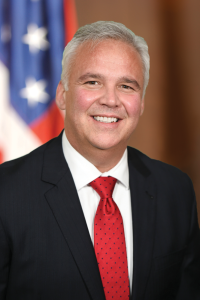
Courtesy Assemblyman Matt Simpson
By Assemblyman Matt Simpson, R–Lake George, 114th District
Representing much of the North Country, I’ve witnessed firsthand the determination of our residents and businesses to thrive amid ongoing challenges. While our state’s economy shows signs of stagnation, rooted largely in Albany’s persistent tax-and-spend approach and overregulation, there are pathways forward through reforms that prioritize affordability and fiscal responsibility.
New York’s job market has revealed underlying vulnerabilities. Without health care sector job growth, the state would have lost over 50,000 jobs in 2025. This weakness spanned multiple industries. Such broad-based slowdowns underscore the ripple effects of state policies that have made it harder for businesses to hire and expand. In rural districts like the 114th, where small enterprises represent much of the local economy, these trends hit particularly close to home.
Housing remains a critical concern, with prices in New York having outpaced the national average. While supply constraints play a role, true affordability extends beyond just building more units and demands an economy that generates the jobs and incomes to support them. In areas like Glens Falls/Queensbury and into the Adirondacks, we need infrastructure upgrades and a less adversarial business climate to attract development.
Child care is another financial hurdle families are forced to grapple with. New York currently ranks as one of the least affordable states for child care, with the average annual cost for center-based care exceeding $20,000. The Child Care Assistance Program was meant to cover almost the entire cost of private child care for nearly 100,000 low- and middle-income families. Unfortunately, the funding for these subsidies did not match demand, and many providers were forced to close when funds dried up. This puts an immense burden on families when teachers are displaced in the middle of the year. I am hesitant to introduce new programs until we fix the good ones first.
We also need to be mindful not to oversimplify complex conversations in the health care sector with blanket solutions. There are existing solutions like the 340B Drug Pricing Program, which save hospitals millions year-to-year at no cost to taxpayers that can unfortunately be exploited. The erosion of such programs means less money channeled back into expanded health care services, resulting in higher costs for recipients. There are many programs from decades ago that work but only need to be modernized and saved from neglect. Let’s start with those.
Energy policy presents another pivotal area for 2026. Affordable, reliable energy is essential for economic vitality, yet Albany’s ambitious goals under the Climate Leadership and Community Protection Act (CLCPA) have driven up utility bills and complicated housing development. A paused mandate for zero-emission appliances and heating in most new buildings could add about $20,000 to home construction costs if implemented. Studies indicate our infrastructure isn’t yet equipped for full electrification, risking outages and higher costs. While pursuing sustainable energy is commendable, the approach must be practical and transparent to avoid burdening families and businesses. I advocate for a full cost-benefit analysis of the CLCPA to ensure it aligns with our economic realities, preventing an energy shortfall that could hinder growth.
This affordability crisis is intertwined with our state’s fiscal habits. Last year’s budget swelled to a record quarter-trillion dollars, double Florida’s budget despite similar populations, and exceeding the combined budgets of Florida and Texas. With some of the nation’s highest property and income taxes, plus burdensome regulations, New York ranks dead last (50th) on the Tax Foundation’s State Tax Competitiveness Index and Economic Outlook. A projected $4.2 billion budget gap for the coming fiscal year highlights the unsustainability of year-over-year spending increases. Unfunded mandates from Albany trickle down to local governments, raising costs for counties and towns in the 114th district and beyond.
Albany’s tax-and-spend agenda has inflated costs across the board. Since Gov. Kathy Hochul took office, overall prices rose by 18%, with specific spikes in housing (up 23%), utilities (up 34.7%), groceries (up 20%) and medical care (up 7.2%). New York now ranks third nationally for housing cost burden, making it increasingly difficult for families to stay rooted here.
This cycle of rising costs fuels outmigration. Between 2020 and 2024, New York’s population declined by 1.2%, while Florida’s grew by 8.2%. Businesses and retirees are relocating southward, taking talent and revenue with them.
To revive everyday affordability, I’ll again champion legislation to temporarily suspend state sales taxes on housekeeping supplies and ready-to-eat foods. Sales tax receipts are projected to grow more than 3% in the coming year; redirecting this windfall back to consumers would provide immediate relief for essentials like motor fuel and personal care items. Additional steps, such as eliminating taxes on overtime pay and tips, would support middle-class workers in hospitality and other key sectors prominent in the North Country.
Ultimately, real change demands deregulation, trimming bureaucracy and curbing spending to create a more competitive environment. Less is more in an arena where so many laws have added to the bureaucracy that it can be paralyzing. By focusing on lower taxes and fiscal discipline, we can prioritize New Yorkers’ needs over expansive agendas.
Assemblyman Matt Simpson represents the 114th Assembly District, which includes parts of Warren, Essex, Washington and Saratoga counties, as well as the town of Northampton in Fulton County. For more information about Assemblyman Matt Simpson,
Please visit his official Assembly website.